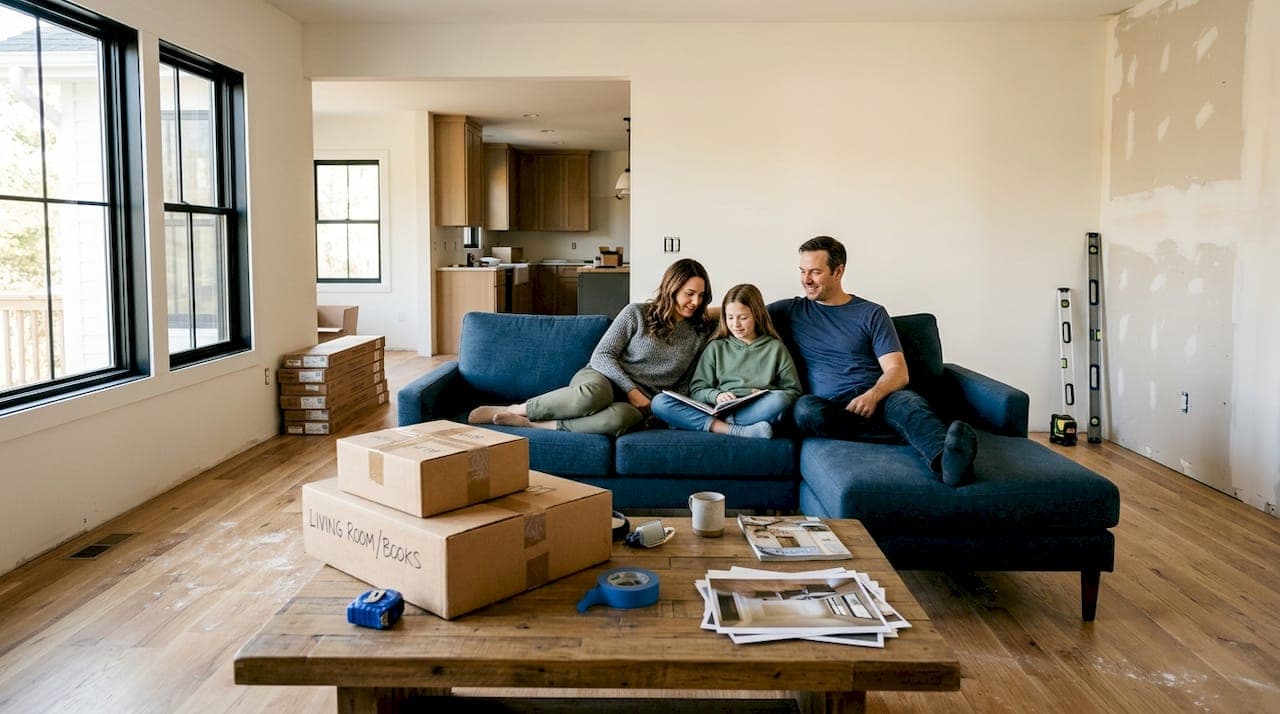
Turning a renovation dream into reality is harder than any design show makes it look. Costs spiral, contractors go quiet, and what started as an exciting project can quickly feel like a mistake. But some homeowners get it right, and their stories reveal a clear pattern: success comes from smart planning, honest communication, and knowing what to expect before the first wall comes down. This article breaks down four standout renovation projects, explains what made each one work, and gives you a practical framework for approaching your own project with confidence.
Table of Contents
- How to spot a successful renovation project
- Modern Victorian: The Needham open-layout transformation
- Colonial Revival expansion: Function meets style
- Energy-smart Craftsman: Combining charm with efficiency
- Kitchen makeovers: Function and flair on a budget
- Why true renovation success isn't just about looks
- Ready to start your own renovation journey?
- Frequently asked questions
Key Takeaways
| Point | Details |
|---|---|
| Clear goals drive success | The most successful renovations start with transparent communication and well-defined project objectives. |
| Value is more than looks | A beautiful outcome means little without reliable process, efficiency, and satisfied homeowners. |
| Customization pays off | Projects that tailor solutions—such as custom cabinets or smart storage—maximize both function and style. |
| Efficiency boosts savings | Upgrading insulation and systems in older homes often cuts costs and increases comfort without losing character. |
How to spot a successful renovation project
Not every renovation that looks good on Instagram is actually a success. A truly successful project delivers on function, stays close to budget, and leaves both the homeowner and contractor feeling good about the process. Looks matter, but they're the last thing on the list.
So what separates a great renovation from a frustrating one? Here are the key indicators worth paying attention to:
- Clear goals set before work begins. Homeowners who define what they want, and why, make better decisions throughout the project.
- Budget control with realistic contingencies. Surprises happen. The best projects plan for them with a 10 to 15 percent buffer.
- Improved livability, not just aesthetics. A beautiful kitchen that's hard to cook in is a failed renovation.
- Transparent contractor communication. Regular updates, honest timelines, and no surprises on invoices.
- Documented progress. Before-and-after records help track value and catch issues early.
One example that checks every box is the Needham Victorian renovation, which used strategic upgrades including a steel I-beam and foundational improvements to deliver lasting structural value alongside visual transformation.
Pricing transparency is just as critical as the physical work. When homeowners don't know what a project should cost, they can't evaluate bids fairly or spot red flags. Platforms that offer reliable renovation bids backed by real data help level the playing field before anyone picks up a hammer.
Pro Tip: Before hiring any contractor, ask for before-and-after photos from at least three past projects and contact those previous clients directly. Verified feedback from real homeowners tells you more than any sales pitch.
Modern Victorian: The Needham open-layout transformation
Victorian homes are beautiful, but they were built for a different era. Small, compartmentalized rooms made sense in the 1800s. Today's families want open, connected spaces that flow from kitchen to living area without walls cutting everything off. The challenge is that those walls are often load-bearing, meaning you can't just knock them down.
The Needham project solved this with serious structural engineering. The team installed a 24-foot, 1-ton steel beam to carry the load previously handled by interior walls, poured a 10-inch concrete wall for foundation support, and upgraded the HVAC system to handle the new open layout efficiently. The result was a completely transformed floor plan that still felt like the same home.
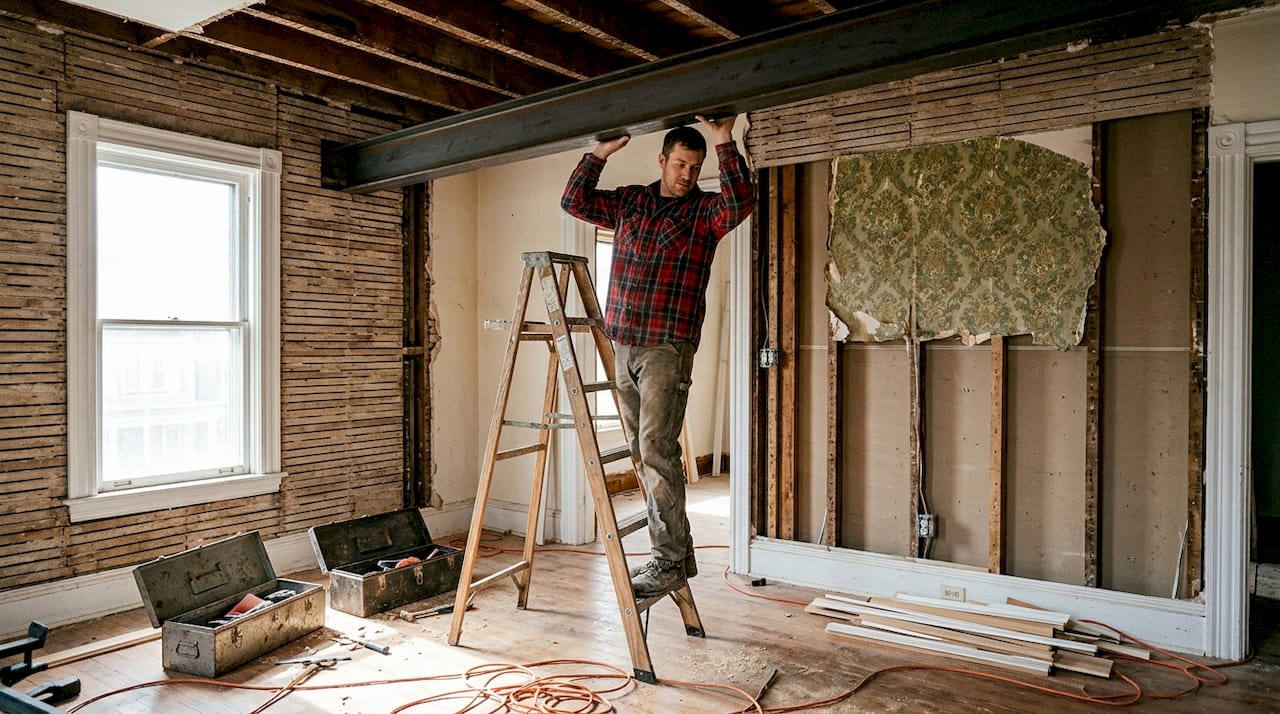
Here's a quick breakdown of the key upgrades:
| Feature | Before | After |
|---|---|---|
| Floor plan | Closed, compartmentalized | Open, connected layout |
| Structural support | Original wood framing | 24-ft steel I-beam |
| Foundation | Aging, insufficient | New 10-inch concrete wall |
| HVAC | Outdated, uneven heating | Modern system, full coverage |
What made this project work wasn't just the engineering. It was the communication between the homeowner and contractor throughout every stage. When unexpected foundation issues came up (and they always do in older homes), the team had already established a problem-solving rhythm that kept costs from spiraling.
- Structural assessment happened before demolition, not during.
- Budget adjustments were discussed openly and agreed upon in writing.
- The HVAC upgrade was planned as part of the layout change, not added as an afterthought.
Pro Tip: Before removing any wall in a home built before 1980, hire a structural engineer for an independent assessment. It costs a few hundred dollars and can save you from a very expensive mistake.
Finding the right contractor for a structurally complex project like this one requires more than checking a license. You need someone with documented experience in historic homes and a track record of transparent communication.
Colonial Revival expansion: Function meets style
Sometimes the best renovation isn't about changing what you have. It's about adding what's missing. A 1930s Colonial Revival home in Ridgewood got exactly that treatment, with a thoughtfully designed rear addition that expanded the home's footprint without disrupting its classic character.
The project created a 500 sq ft rear addition, added casement windows for natural light, and installed a miniduct HVAC system, a compact, high-velocity system that fits inside existing walls without bulky ductwork. The result was more space, better comfort, and a home that felt genuinely updated without looking out of place in its neighborhood.
Here's what the renovation process looked like, step by step:
- Planning phase: Defined goals, set a realistic budget, and established a 9-month timeline.
- Contractor selection: Vetted candidates based on experience with historic homes and addition projects.
- Material choices: Selected casement windows and custom cabinetry that matched the home's original style.
- Project management: Weekly check-ins kept the timeline on track and flagged issues early.
- Final review: Homeowner walkthrough with punch list before final payment.
| Feature | Before | After |
|---|---|---|
| Living space | Original footprint | +500 sq ft rear addition |
| HVAC | Central system, poor coverage | Miniduct, room-by-room control |
| Natural light | Limited rear windows | New casement windows throughout |
| Storage | Minimal | Custom cabinetry, built-in solutions |
The 9-month timeline was a key part of what made this project feel manageable. When homeowners know the end date, they can plan their lives around the disruption instead of living in indefinite uncertainty. Finding reliable contractors who commit to realistic timelines in writing is one of the most underrated factors in renovation success.
Energy-smart Craftsman: Combining charm with efficiency
Older homes have character that new builds rarely match. But they also have drafty windows, inadequate insulation, and heating systems that work twice as hard for half the result. The good news is that energy efficiency and historic charm don't have to be opposites.
A Portland Craftsman bungalow proved exactly that. The home was retrofitted to Passive House standards, which means it was upgraded to meet one of the most rigorous energy performance benchmarks in residential construction. In plain terms: the home was made nearly airtight, with thick insulation and a ventilation system that recovers heat from outgoing air before it escapes.
Here's what the energy upgrade included:
- Cellulose insulation packed into walls and attic to dramatically reduce heat loss.
- Airtight building envelope that seals gaps where conditioned air typically escapes.
- Heat recovery ventilation (HRV) to bring in fresh air without losing the warmth already inside.
- Ducted heat pumps that operate at roughly three times the efficiency of traditional heating systems, delivering a 66% efficiency gain over the original setup.
All of this happened while the home's original trim, layout, and Craftsman details stayed intact. The owners described the result simply:
"We saved hundreds yearly while keeping the home's unique trim and layout."
That's the real payoff of an energy-smart renovation. Lower utility bills every single month, for the life of the home. The upfront cost is higher, but the long-term math almost always works in the homeowner's favor.
Kitchen makeovers: Function and flair on a budget
Kitchens are where most homeowners feel the renovation itch most strongly. And they're also where budgets most often blow up. The secret to a successful kitchen renovation isn't spending more. It's spending smarter.
A recent project documented by Welsh Design Studio showed exactly how to do this. The team reused existing appliances, shifted the island to improve traffic flow, and added custom drawers including a dedicated paper towel drawer that sounds small but makes daily life noticeably easier. A focal-point backsplash added visual impact without a major price tag.
Here's what made the budget work:
- Reused appliances in good condition, saving thousands compared to full replacement.
- Shifted island position to open up the work triangle and improve how the space actually functions.
- Custom hood as a design statement that draws the eye without requiring expensive cabinetry changes.
- Tailored storage solutions built around how the family actually cooks, not what looks good in a showroom.
- Focal-point backsplash that delivers visual punch at a fraction of the cost of a full tile overhaul.
The lesson here is that layout and storage matter more than appliances or finishes. A kitchen with a smart layout and well-organized storage feels luxurious even with modest materials. A kitchen with premium appliances and poor flow feels frustrating every single day.
Pro Tip: Before finalizing your kitchen plan, spend a week tracking exactly how you move through the space while cooking. That real-world data will tell you more about what to change than any design consultation.
Why true renovation success isn't just about looks
After looking at these four projects, a pattern becomes clear. The ones that worked weren't just well-designed. They were well-managed. And that's the part most renovation content glosses over.
Aesthetic-focused renovations often fail not because of bad taste, but because of broken trust, unclear expectations, and no plan for when things go sideways. Every project in this article hit unexpected obstacles. The Needham Victorian found foundation issues. The Colonial Revival had to adapt its HVAC approach. What separated these projects from disaster stories was a transparent bid process and a contractor-client relationship built on honest communication from day one.
The uncomfortable truth is that the best renovation outcome isn't just a beautiful space. It's a process that didn't leave you exhausted, broke, or angry. Homeowners who prioritize contractor trust, written agreements, and contingency planning consistently report higher satisfaction, not just with the result, but with the entire experience. That's the standard worth aiming for.
Ready to start your own renovation journey?
These real-life transformations show what's possible when the right people, process, and planning come together. But knowing what works is only half the battle. Finding a contractor you can actually trust, at a price that makes sense, is where most homeowners get stuck.

BidWithBob makes that part easier. The platform connects you with vetted contractors who provide transparent, competitive bids so you know exactly what you're paying for before any work begins. Milestone-based payments protect both sides, and a structured workflow replaces the usual chaos of calls, quotes, and crossed fingers. When you're ready to move from inspiration to action, get renovation quotes through BidWithBob and start your project the safer way.
Frequently asked questions
How do I choose reliable contractors for my renovation?
Check for credentials, read verified reviews, and ask about clear communication styles before hiring. Requesting references from recent projects similar to yours is one of the most reliable filters available.
What's the best way to avoid budget overruns?
Request detailed written bids, establish contingency funds of at least 10 to 15 percent, and communicate openly with your contractor throughout the project. Surprises cost less when everyone is already talking.
Can energy efficiency improvements fit into older homes?
Yes, the Portland Craftsman retrofit shows that historic homes can achieve dramatic energy savings through Passive House upgrades while keeping their original character fully intact.
What renovation changes add the most value?
Expanding living space, updating kitchens, and improving energy systems consistently deliver strong returns. The Colonial Revival expansion added 500 sq ft and significant resale value, while a smart kitchen renovation improved daily function at a fraction of a full remodel cost.