
Dreaming of a beautifully updated kitchen or a bathroom that finally works for your family is exciting. But for most homeowners, that dream quickly runs into a wall of questions: What will this actually cost? Can I trust the contractor I hire? What happens when something goes wrong mid-project? These fears are valid, and they stop a lot of great projects before they even start. This guide walks you through every major phase of a home remodel, from clarifying your vision to managing contractors and timelines, so you can move forward with confidence instead of anxiety.
Table of Contents
- Define your vision and assess your home
- Set your budget and estimate costs accurately
- Build your project team: hiring and vetting contractors
- Timelines, permits, and phasing your remodel for success
- A remodeler's perspective: what most guides won't tell you
- Simplify your remodel with the right partner
- Frequently asked questions
Key Takeaways
| Point | Details |
|---|---|
| Start with clear goals | Knowing your vision and needs sets up a remodel for success. |
| Budget for surprises | Include a 10-30% contingency in your budget to handle the unexpected. |
| Vet contractors carefully | Hiring trustworthy, qualified professionals prevents major issues later on. |
| Plan the logistics | A detailed timeline with proper permits keeps your project efficient and minimizes stress. |
| Communication is key | Frequent updates with your team solve most problems before they grow. |
Define your vision and assess your home
Every successful remodel starts long before anyone swings a hammer. It starts with a clear picture of what you actually want and a realistic understanding of what your home needs. Skipping this step is one of the most common and costly mistakes homeowners make.
Begin by writing down your goals. Are you remodeling to improve daily function, like adding storage or updating a cramped layout? Are you focused on style, comfort, or preparing the home for resale? Your goals will shape every decision that follows, from materials to budget to contractor selection. The remodeling planning process becomes far less stressful when you know exactly what you are trying to achieve.
Once your goals are clear, conduct a thorough inspection of your home before finalizing any plans. Structural issues, outdated electrical panels, aging plumbing, and poor insulation can all add significant cost if discovered mid-project. Planning a home remodel begins with defining goals, setting a realistic budget with 10-30% contingency, and conducting a structural inspection. Hiring a licensed inspector upfront can save you from expensive surprises later.
Next, separate your wish list into two clear categories:
- Must-haves: Items that affect safety, function, or livability (e.g., fixing a leaking roof, updating a failing HVAC system, adding a necessary bathroom)
- Nice-to-haves: Aesthetic upgrades or bonus features you would love but could live without (e.g., heated floors, custom cabinetry, a kitchen island)
This distinction keeps you grounded when costs start to climb, which they almost always do.
If your home was built before 1978, check for lead paint or asbestos before any demolition begins. Historic homes may also have preservation requirements that limit what changes you can make. Ignoring these details early creates legal and financial headaches down the road.
Important: Never underestimate the disruption a remodel causes to daily life. If you are renovating a kitchen or bathroom, plan for temporary alternatives. If the project is large, consider whether staying elsewhere temporarily makes sense.
Pro Tip: Walk through your home with a contractor or inspector before drawing up any plans. Their trained eye will catch issues you would never notice, and that knowledge directly shapes a smarter budget.
Set your budget and estimate costs accurately
Having assessed your home's needs, the next step is to be realistic and prepared financially. A remodel budget that falls apart halfway through the project is far more stressful than a conservative one you stick to from the start.

Your total project cost includes more than just materials. Factor in labor, design fees, permit costs, temporary housing if needed, and the inevitable surprises. A realistic budget with contingency of 10-30% is not optional. It is the difference between a project that finishes smoothly and one that stalls because the money ran out.
Here is a general cost breakdown for a mid-range remodel to help you think through the numbers:
| Cost category | Typical share of budget |
|---|---|
| Demolition and disposal | 5-10% |
| Structural and rough-in work | 20-30% |
| Finishes (flooring, tile, paint) | 25-35% |
| Fixtures and appliances | 15-20% |
| Permits and design fees | 5-10% |
| Contingency reserve | 10-30% |
These are ranges, not guarantees. Your specific numbers will depend on your location, the scope of work, and material choices. Pricing transparency for remodels is one of the hardest things to find in this industry, which is exactly why data-backed estimates matter so much.
To stay on budget throughout the project, follow these steps:
- Get itemized bids from at least three contractors before committing to anyone.
- Lock in material choices early so prices do not shift mid-project.
- Track every expense in a shared spreadsheet or project management tool.
- Review spending weekly against your original budget.
- Treat your contingency fund as untouchable unless a genuine surprise forces you to use it.
Pro Tip: Minor updates like fresh paint, new hardware, and updated lighting often deliver more return on investment than full gut renovations. Before committing to a major overhaul, ask yourself whether a targeted refresh could meet your goals at a fraction of the cost.
Build your project team: hiring and vetting contractors
With a realistic budget in place, it is time to assemble the team who will bring your remodel to life. This step deserves more attention than most homeowners give it, because the right contractor makes everything easier, and the wrong one can turn your project into a nightmare.
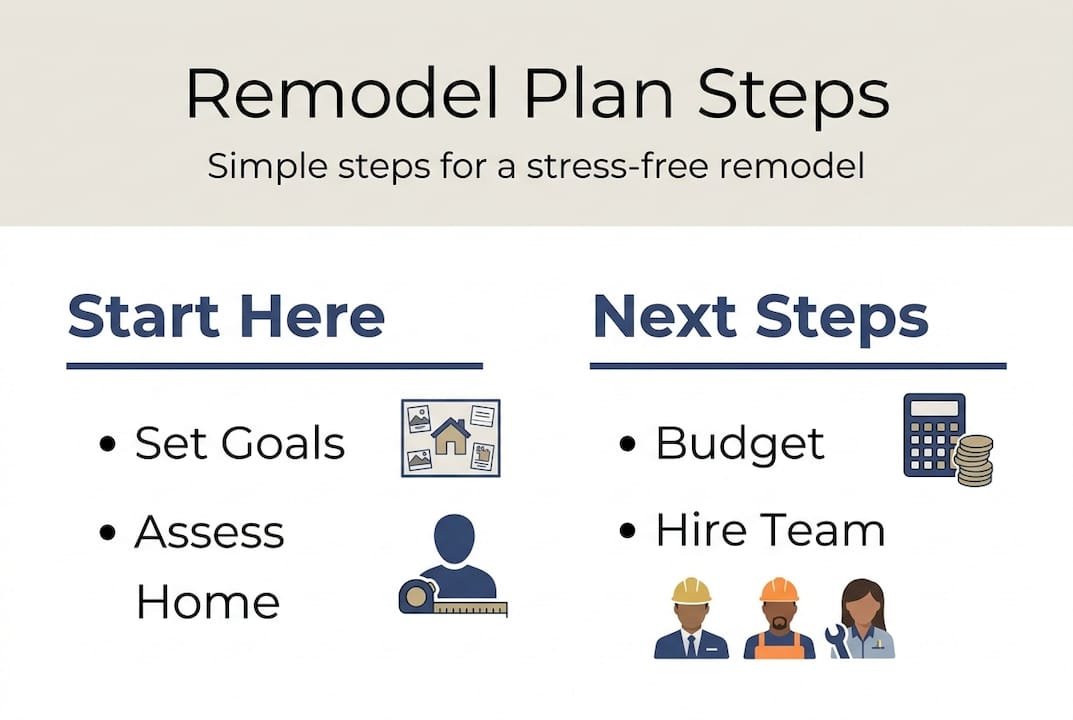
Hiring vetted contractors means checking licenses, insurance, and reviews, and getting at least three bids before making any decisions. Do not skip any of these steps, even when a contractor comes highly recommended by a friend.
Here is what to look for and what to avoid:
| Green flags | Red flags |
|---|---|
| Valid state license and liability insurance | Asks for large upfront cash payment |
| Detailed written bid with line items | Vague or verbal-only estimates |
| Verifiable references from recent projects | No physical address or business history |
| Clear communication and prompt responses | Pressures you to sign quickly |
| Milestone-based payment schedule | Refuses to pull permits |
When comparing bids, do not automatically choose the lowest number. A bid that is significantly cheaper than the others often means the contractor is cutting corners somewhere, whether on materials, labor quality, or permits. Instead, look for a bid that is detailed, realistic, and backed by a contractor who communicates clearly.
Use this checklist when vetting any contractor:
- Verify their license with your state licensing board
- Confirm they carry general liability and workers' compensation insurance
- Ask for three references from projects completed in the past 12 months
- Read online reviews on multiple platforms
- Review their contract carefully before signing
For vetted contractor selection tips, a structured platform that organizes bids and contractor credentials in one place removes a lot of the guesswork from this process.
Pro Tip: Schedule weekly check-in meetings with your contractor from day one. These short conversations prevent small misunderstandings from turning into expensive change orders or delays.
Timelines, permits, and phasing your remodel for success
With your contractors selected, managing the project smoothly depends on smart scheduling and logistics. A remodel without a clear timeline is a remodel that drifts, and drift costs money.
Obtaining permits is a step many homeowners want to skip to save time or money, but it is never worth it. Permits protect you legally, ensure the work meets code, and matter enormously when you sell the home. Unpermitted work can trigger costly corrections or kill a sale entirely. Contact your local building department early to understand what your specific project requires.
A well-phased remodel follows a logical sequence:
- Demolition: Remove what is being replaced, expose the structure, and dispose of debris.
- Rough-in work: Complete structural changes, then electrical, plumbing, and HVAC work before walls close up.
- Inspections: Schedule required inspections at each phase before moving forward.
- Finishes: Install drywall, flooring, tile, cabinetry, and paint.
- Punch list: Walk through with your contractor to identify and fix anything incomplete or below standard.
Phasing work room by room, holding weekly contractor meetings, and ordering materials early are proven ways to avoid the delays that push projects weeks or months past their original end date. Material lead times in particular can surprise homeowners who have never ordered custom tile or cabinetry before.
To minimize disruption to your daily life during construction:
- Set up a temporary kitchen if yours is being renovated
- Seal off work areas with plastic sheeting to contain dust
- Establish clear work hours with your contractor
- Store valuables and fragile items away from the work zone
Safety first: Always prioritize structural and safety-related updates before cosmetic work. A beautiful new kitchen means nothing if the electrical system behind the walls is a fire hazard.
A remodeler's perspective: what most guides won't tell you
Successfully navigating the logistical side sets the stage for a satisfying outcome, but there is one lesson even detailed guides rarely share: most remodel stress comes from unclear expectations, not just money.
Homeowners and contractors often start a project with completely different assumptions about what is included, how communication will work, and what "done" actually looks like. No budget spreadsheet fixes that. What fixes it is a written scope of work, regular check-ins, and a willingness to address problems early instead of hoping they resolve themselves.
There is also a real tension between remodeling for resale value and remodeling for how you actually live. Minor updates often outperform major overhauls when it comes to return on investment, but the right answer depends on how long you plan to stay in the home. Chasing trends rarely pays off. Investing in livability almost always does.
Finally, even the best-planned projects hit unexpected issues. The question is not whether something will go wrong. It is whether you and your contractor have the relationship and the process to handle it without the project falling apart. That is what the remodeling planning process is really about: building a foundation strong enough to absorb the surprises.
Simplify your remodel with the right partner
If you want a smoother, more transparent remodel, technology can make each step easier. Planning, budgeting, and hiring do not have to feel like three separate battles fought in isolation.

BidWithBob brings everything into one structured workflow. Compare itemized bids from vetted contractors, track your project timeline, and manage payments through a milestone-based system that protects both you and your contractor. With remodel planning tools built specifically for homeowners, you get real pricing data, a clear process, and the confidence that comes from knowing exactly where your money is going. The safer way to renovate is not just a tagline. It is a system designed around the problems that derail real projects.
Frequently asked questions
What is the first step in planning a remodel?
The first step is to clearly define your remodeling goals and have a structural inspection to uncover any hidden issues. Defining goals and inspecting your home before budgeting prevents costly surprises later in the project.
How much contingency should be added to a remodel budget?
Plan for a 10-30% contingency fund to cover surprises or unforeseen costs during your remodel. The older your home or the larger your project scope, the closer to 30% you should budget.
How can I check if a contractor is qualified?
Always review licenses, insurance, references, and online reviews, and get at least three bids to compare. Checking licenses and insurance through your state licensing board takes less than 10 minutes and can save you from serious problems.
What permits do I need for a home remodel?
Common permits cover demolition, structural work, electrical, and plumbing changes; local building departments can specify requirements. Obtaining permits before work begins protects you legally and ensures the work meets current building codes.